
Episode #01
Is DEI Dead? Why the Work Matters Now More Than Ever
About This Episode
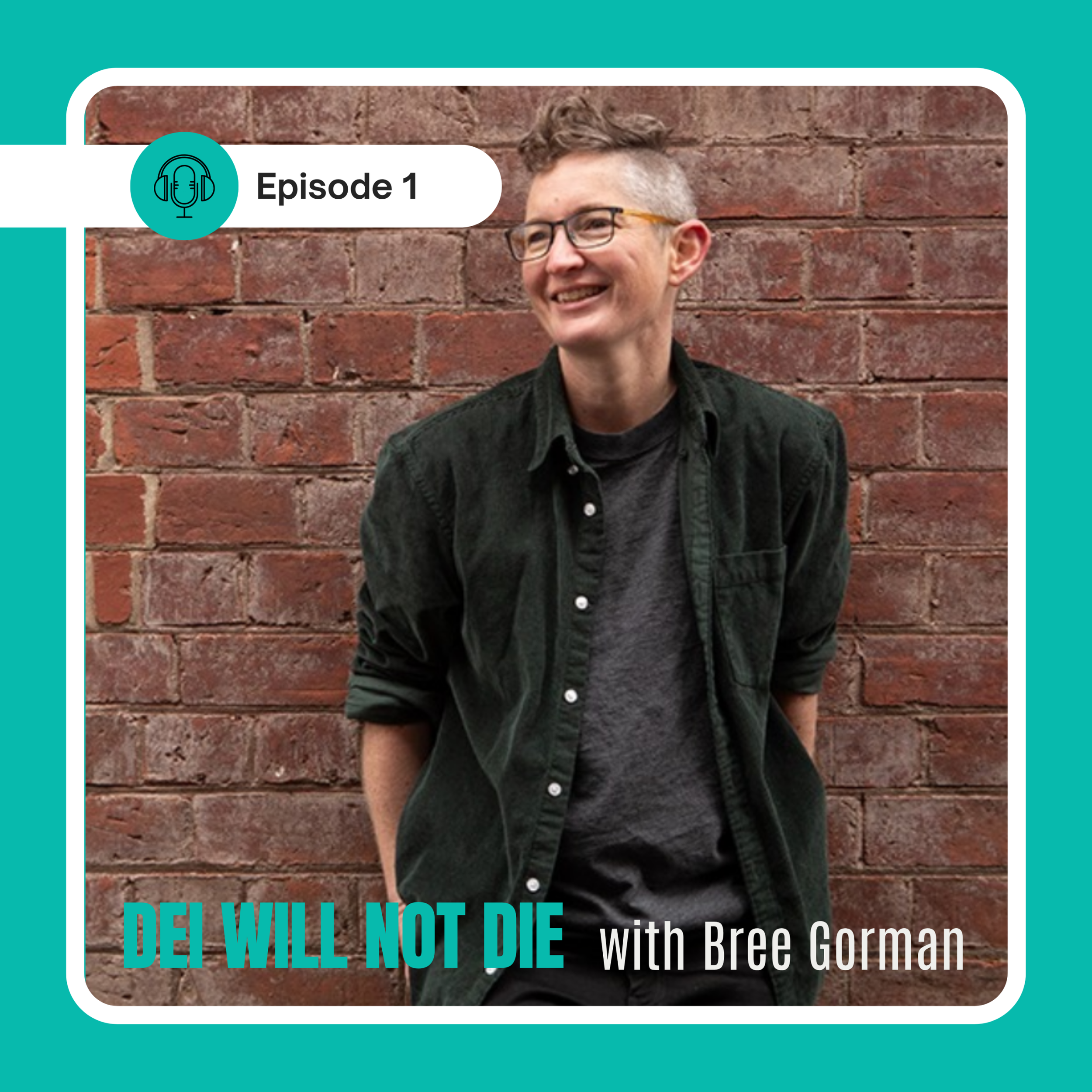
In this debut episode of DEI Will Not Die, Dr Bree Gorman lays the foundation for the podcast with a clear message: while the language and tactics of DEI may change, the need for inclusive, equitable workplaces never goes away.
Bree shares the personal and professional journey that led them into diversity, equity and inclusion work—covering everything from higher education to consultancy, ADHD and gender identity. They also reflect on the backlash DEI is facing globally, and why now is the time to double down on real, impactful change.
Whether you’re leading DEI strategy, part of an Employee Resource Group, managing people and culture, or just passionate about removing barriers in the workplace—this episode offers grounding and solidarity for those doing the work.
For tools, coaching, and support: breegorman.com
What You'll Learn
● DEI is not dead, but it does need to adapt and change.
● Being open to owning our mistakes and accepting the vast and growing nature of DEI work.
● Bree shares how their gender identity and medical diagnosis have fed into their work as a DEI consultant, enabling them to be their authentic self.
Resources Mentioned
Keep Learning & Connect With Bree
Want practical strategies for navigating resistance and building real momentum in your DEI work? Access my free webinar on evidence-based DEI strategies here. It’s packed with tools you can start using today.
If this episode sparked ideas or questions and you want to talk more about how I can support your team or organisation, book a free 20-minute call with me. I’d love to hear what you’re working on and explore how we can move the work forward—together.
And don’t forget to subscribe to my newsletter for fresh insights, events, and tools to support your inclusion journey. Because real change doesn’t happen in silence.
-
DEI Will Not Die 01 – Is DEI Dead? Why the Work Matters Now More Than Ever
[00:00:00] Is DEI dead? Not even close. I’m Bree Gorman and this is DE. I will not die the podcast for people doing the real work of inclusion. Whether you are leading a team shaping DEI strategy or just trying to make change that lasts. You’re in the right place. We will cut through the fluff and dig into practical insights that will help you lead with clarity, courage, and impact.
Want more tools and support? Head to breegorman.com.
Welcome to this podcast where we are going to continue to do. The work that we know needs to be done regardless of what the social political climate is presenting to us. I know it’s a pretty rough time in many places to try and be doing and leading [00:01:00] diversity, equity, and inclusion work, but those of us in the space know that regardless of what you call it, regardless of what legislative environment exists, at any point in time, this work never goes away.
We are always needed to be creating equitable and inclusive workplaces, communities, sporting clubs, and schools. We know that. What sometimes changes is how we do the work and we need to adapt and we need to be aware and listening to what’s happening around us and working out well In this current time, in this current organisation, what needs to be tackled.
From an inclusive lens, and how are we gonna do that in a way that still creates the impact that we’re hoping to achieve? And that, as I said, may change based on what’s happening around [00:02:00] us and within our organisations. So I wanted to start this podcast to kind of remove a lot of the fluff and the drama and everything that’s going on around us, and really focus on what are the practical things that create change.
What are the things we know are gonna work in our organisation or what are the things we’re gonna try that may not work, but we’re gonna try them. We’re gonna monitor them and we’re gonna evaluate them and see if it works. And if it doesn’t, then let’s change tact. I’ve been wanting to start a podcast for a while, but I think now is the time.
Because the work has gotten harder and depending on where you are around the world, that complexity comes at at very different levels of fear, I guess, and, and emotional load, and a concern around safety too, in many places. I’m recording this podcast on the land of the wrung people, and I [00:03:00] wanna pay my respects to their elders past and present.
And I wanna call out any Aboriginal or Torres Strait Islanders who happen to listen to the podcast. I’ve had the privilege of growing up on wrung country, uh, country that was so well cared for by what wrong people for so many thousands of years before white settlement. I’ve also had the privilege of meeting.
What around people and learning from their knowledge about the land and also their knowledge about thinking, the ways of thinking, the ways of doing and being, and I continue to open up my mind to learn more, to break down some of the preconceived ideas that I have having been raised in a colonialistic society.
As many of the listeners would have as well. So who am I for those who haven’t come across me before? I’m Brie. I run a diversity, equity and inclusion [00:04:00] consultancy. I’m an educator and I’m also a coach, so I coach people doing and leading bi e work. And I also run workshops around inclusive leadership and things like that.
But how did I come to this work and, and why, why are people listening to me when it comes to diversity, equity, and inclusion? I started in this work almost 10 years ago. At the time, I was somebody who had a bit of a career as a research manager and a business development manager in the higher education sector at university.
I realised it was time to change careers. I wanted to find more purpose, and I wanted to align my values to the work that I was doing, and a role popped up. And interestingly, that role was about gender equity in science, technology, engineering, mass and medicine, which was my background. And I had a very dear mentor of mine ring me up and say, Hey, have [00:05:00] you seen this job?
And I hadn’t. And I had a look at it and I said, oh, I don’t have an experience in that work. And she said, no. Look at the skills. They’re completely transferable. It is you just packaged in a different way. And so I looked at the skills and I thought, you know what? Yeah. And I could get some purpose out of this work.
So I applied, I got the job, and within a few months I managed to get myself promoted into a leadership role. And that started a, a fair period of time where I worked as a diversity, equity and inclusion manager. So I know a fair bit about the higher education sector, and I also know a fair bit about leading a team in the diversity, equity, and inclusion space.
But I realised that. I needed to do more. It wasn’t enough to just work to improve the situation for people from underrepresented and marginalized backgrounds in that organisation that I was in, I wanted to do it across sectors. I wanted to do it [00:06:00] in organisations and areas that didn’t have the same level of funding and support that we had to try and really push change out further beyond.
Just those few progressive institutions that existed at the time, and so hence Bree Gorman Consulting was formed and over the last five years I’ve worked on countless projects. I’ve trained, I think we worked out over a thousand people, and I’ve really learned to love the work, but more importantly, recognize that every day doing this work is a learning journey.
I learn something new every day. I make a mistake every day, and I learn and I move on and do better. And that’s what this podcast is about. Let’s be open to the mistakes that we make. Because there is no handbook, there is no manual that tells us how to do DEI work. It’s so different every day and it’s so context specific.[00:07:00]
And so let’s create a space here where we can really explore the different things that people are doing and using to create impact to create those inclusive, equitable workplaces that we’re looking for. So it probably makes sense to share a little bit about me personally as well. I’m ADHD. I got a diagnosis two years ago now.
After a lifetime of not quite understanding why some things were more difficult for me than others, why I had this endless sense of energy, why concentrating was difficult. Now, when people first suggested to me that I might be ADHD, I was very doubtful I had achieved at school, and my picture and stereotype of people who are ADHD were those who struggled academically.
I had a PhD. Chemistry, by the way, not diversity, equity, and inclusion, but [00:08:00] in my mind, if you had a PhD, you couldn’t possibly be A DHD. Well, I’ve learned a lot since then, and I’ve also reflected on the fact that I completed my PhD really in the last six months of the three and a half years, where I managed to really get myself motivated based on the deadline, which is a very typical trait of A DHD is.
And so I’m still learning about that and trying to create systems to allow myself to be able to flourish and overcome some of the executive functioning challenges that I face. I’m a parent of two kids who, uh, 11 and 13 now, and I’m also trans non-binary. I came out as trans non-binary at about the age of 36.
I would’ve done it at the age of four if I had have had the language. And that’s such a common story for other queer folk of my generation and above, where we [00:09:00] just didn’t have the language to understand who we were from a gender perspective. I knew I wasn’t a girl, but I didn’t really. Feel like I was a boy either.
And yes, at the ripe age of 36, I was able to find the language that worked for me and be able to really lean into myself for the first time ever, which was such a liberating experience. That gives you a little bit of sense of me outside of being a DEI consultant. But as you can see, my personal life absolutely contributes and feeds to the work that I do on a daily basis, and that works really well for me in terms of being able to bring my, my whole authentic self.
To the work that I do. Okay, so who is this podcast for? You’ve got through this and you’re like, I’m not sure. Will I keep listening? Will I not keep listening? This podcast is for people doing DI work in organisations and I don’t care in what [00:10:00] shape or form it is that you’re doing the work. Some of you will be DEI practitioners have actually dedicated diversity, equity, and inclusion roles.
Others may be leading or a part of your employee resource group or a Pride Network, perhaps other listeners might be leaders, people and culture, hr, just anybody really who has an interest in how we create more inclusive workplaces. And that’s what we’re gonna keep all of the topics about. How do we really create the change we wanna see. I’m also gonna bring in some guests who’ll be able to share professional lived experience and also personal lived experience that will help with the work as well. Let’s just wrap back around before I finish up on this first episode. The name DEI will not die. We’ve heard it particularly coming out of the US that DEI is dead.
The amount of articles over the last six months that I’ve read that have [00:11:00] suggested that DEI is dead, uh, couldn’t count. We know it’s not dead. It may have to change. And I think it should change. I think there’s DEI practices that haven’t been done so well in the past, and we need to learn from that. And we need to do better.
So DEI will not die, but what it needs to do is adapt and change and learn to be able to deliver on the objective that we’ve always had, which is let’s remove those barriers that people are facing in our workplaces. So thank you for being here. I hope that you will follow this podcast and listen to the next episodes that come along.
If you have ideas for topics that you’d like us to cover, I’d love you to send them through to me. You can go to my website, breegorman.com and send through some ideas through the contact us page. That would be fantastic. Really keen to bring the topics to you that you’re [00:12:00] interested in. And maybe share the podcast with people that you know, others who you think may get value out of this.
If you wanna be a guest, reach out to me and I’d love to have you on. So thanks for being here. You’re part of this community now, and I’m really looking forward to learning myself as we go along this journey and learning from you. As you send me your thoughts, reflections, and extra topics and stories to go along with what we discuss here on DEI Will Not Die.
Well, that’s it for today’s episode of DEI Will Not Die. Want more resources and support to do the work well, why don’t you visit breegorman.com and don’t forget to follow or share this episode with someone who cares, and maybe also someone who should.