
Episode #04
Who Does DEI Work Belong To?
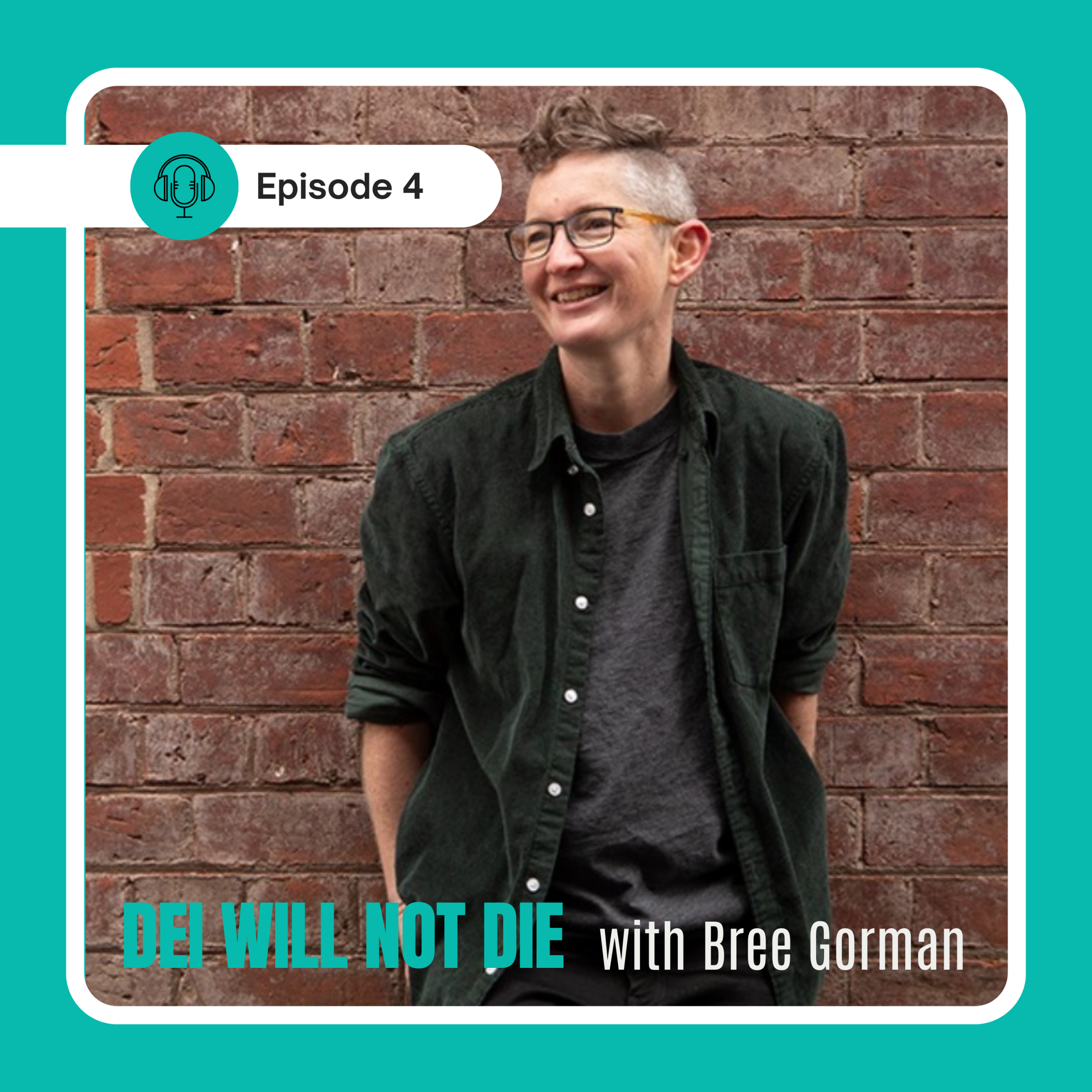
About This Episode
In this episode of DEI Will Not DIE, Dr Bree Gorman unpacks the realities of driving real change when layers of management can slow things down or stop them entirely.
Too often, DEI officers and inclusion managers are buried under layers of management, with five or more decision-makers between them and the CEO. This structure makes creating meaningful change not just difficult but almost impossible.
Bree explores why DEI can’t sit on the shoulders of one person or team. Real progress requires DEI to be a shared responsibility across the whole organisation. Leaders must allocate resources, value DEI expertise, and ensure practitioners have direct access to decision-makers.
For tools, coaching, and support: breegorman.com
What You'll Learn
● The importance of leaders allocating resources and listening to DEI practitioners
● How HR/People & Culture teams and DEI experts can collaborate effectively, even when priorities seem to conflict
● Why recognising DEI as a specialised skill set leads to stronger systems change
Resources Mentioned
● Check out the Inclusive Leadership Workshop Expertise that empowers leaders to build inclusive workplaces.
● Read the blog ‘From Drowning in DEI Tasks to Strategic Impact’
● Are we connected on LinkedIn?
Keep Learning & Connect With Bree
Want practical strategies for navigating resistance and building real momentum in your DEI work? Access my free webinar on evidence-based DEI strategies here. It’s packed with tools you can start using today.
If this episode sparked ideas or questions and you want to talk more about how I can support your team or organisation, book a free 20-minute call with me. I’d love to hear what you’re working on and explore how we can move the work forward—together.
And don’t forget to subscribe to my newsletter for fresh insights, events, and tools to support your inclusion journey. Because real change doesn’t happen in silence.
-
[00:00:00] Is DEI dead? Not even close. I'm Bree Gorman and this is DEI Will Not Die the podcast for people doing the real work of inclusion. Whether you are leading a team shaping DEI strategy or just trying to make change that lasts. You're in the right place. We will cut through the fluff and dig into practical insights that will help you lead with clarity, courage, and impact.
Want more tools and support? Head to breegorman.com
Well, hello. And welcome back to DEI Will Not Die. For those of you who are watching on YouTube, you can see that today's the day that I am desperately in need of a haircut. So we're rocking a mop, um, today. Lots [00:01:00] of curls, lots of hair, and you know what it feels like that kind of day today for me. But I am dressed, presentable, and ready to talk to you about.
Where does DEI belong in terms of whose role is it to do DEI work in an organisation and of course I hear you say, well, it's the DEI manager's role, and I'd like to challenge that. I think it is really easy for organisations to give the DEI person the full responsibility for creating organisational wide change. Change. It's a big job. Right? But before I go too much into that, I do want to acknowledge the Wadawurrung people. That's whose land that I have the privilege of living, working, and playing on. And I wanna recognise the atrocities that occurred on this land with colonization and [00:02:00] the impacts of the continual colonisation that's occurring on the Wadawurrung people and other traditional owners across the country that is currently called Australia.
I wanna acknowledge elders past and present, and a call out to any listeners that we have on the podcast who are Aboriginal Torres Strait Islander, or for that fact, First Nations people across the globe. So who does DEI belong to? If it shouldn't all sit in the lap of the DEI manager or the DEI inclusion officer.
The reality is quite often those roles are buried down in multiple layers of management. So I talk to some DEI practitioners who have five decision makers between them and the CEO and I would postulate that this makes creating change almost impossible. If not laughable. [00:03:00] Really the person who has professional experience in diversity, equity, and inclusion, the person who's tasked with creating the diversity, equity, and inclusion plans and strategies, and then implementing them cannot be buried under layers of management.
They need to have access to leaders and regular access to leaders to be effective because DEI work is only effective. When it is owned by the whole organisation. I also believe that DEI is the responsibility of everyone. Regardless of where you sit in the organisation, you should understand what the values and principles are, what the DEI objectives are for the organisation, and you should know your role in it.
And that is the responsibility of the DEI manager or officer. Also, it's a responsibility of leadership to make sure that this is a key priority for us. [00:04:00] I've worked with a lot of clients who have inclusion as one of their organisational values, and yet I don't see that show up in their performance management processes or their work plans or their selection criteria for leadership roles.
It's just like, Hey, let's all just be good people and be inclusive. And that's just not how it works. That's not how we get change to happen. Change happens when people feel responsibility for it, firstly, when they understand that change is required. We're certainly not there with, you know, many employees in organisations or leaders.
It happens when we know it's required, but also when we take responsibility for it, and we need to get people across the business to take responsibility for creating a diverse, equitable, and inclusive environment and all that comes with that. I think it's very easy for a [00:05:00] leadership team to delegate their DEI responsibilities down to someone who has a role called DEI manager and likely has some lived experience of exclusion.
It makes leaders kind of feel good, like that's somebody else's job. And hey, we've got accreditation programs that guide the work anyway, so we'll just, we'll just let this happen. But when it comes to allocating resources, mm, no, sorry. Not a key priority of the business when it comes to actually listening.
Valuing and recognizing the expertise that that practitioner brings to the work. That is all not always a given either. The amount of times I've seen executive members overrule the advice of A DEI practitioner based on their own lived experience. And yes, I'm talking women in leadership roles. I'm talking people who [00:06:00] come from other underrepresented or marginalised backgrounds who actually actively take the work backwards.
Who don't recognise the expertise of A DEI practitioner and how the work may have changed or how maybe what they did in their last organisation is not gonna fly in this organisation. And so they speak over. And for the DEI practitioner. Now I will make a caveat here. There are many DEI practitioners themselves who don't know the work.
That's the reality. I think the latest stat showed in Australia that DEI practitioner's career usually lasts about four years, so that's not a lot of time to build knowledge and expertise. I know when I first came to the work, I didn't have any expertise. And all of a sudden I, you know, was buried down in layers of management, but found myself sitting in front of [00:07:00] executive members and talking to them about their gender pay gap.
Now that's all well and good, but at the time I didn't have a lot of experience or expertise in what agenda pay gap was, how you can shift or move it. Yet I was being treated as the person who knew their stuff. I think there's, there's multiple sides to this coin, right? Where we are placing responsibility for driving organisational change.
Enhance it. Either. Either don't have the power and authority to make the change or don't have the experience or skills necessary to advocate for that change. So there's a lot of work to do in this industry, that's for sure. A. So what is the role of senior leaders in DEI work? Well, I would say anybody who leads people needs to have [00:08:00] very good knowledge and understanding around what systemic barriers look like in an organisation and how we can go about removing and mitigating them.
I think that's the first point, and I would say the majority of leaders do not have those skills. And I know that I've run inclusive leadership workshops for groups of leaders for over five years now, and the majority of leaders I have spoken to do not have the skills or the knowledge to first identify barriers that exist for others in the organisation and then actively mitigate them in a way that is sustainable and long term.
So that's a skill that we need to teach and we don't just need to be teaching it in our organisations, but we also need to prioritise and value it in our recruitment processes and in our promotion processes. Now, some organisations have moved to the point where we see selection [00:09:00] criteria around inclusive leadership, and then when interviews occur, questions are asked that delve into.
The behaviors that that leader has demonstrated in the past that are inclusive times when they have identified and removed barriers, times when they've advocated for change and implemented change through an inclusive and equitable lens. I. Sounds like a great place to start. Right, and it's not that difficult.
It just requires us to prioritise inclusive leadership as a skill that we need in this organisation because it is good for our people and it is good for our business. That's something that definitely needs to happen. I think also leaders need to become acutely aware of when to stand beside. And when they need to advocate, who's missing from conversations, from decision making [00:10:00] conversations, and what role are they playing to fill those gaps?
How are they actively building their own knowledge on a weekly basis, and how are they tapping into the experiences of their employees? Now, those things are kind of more on a personal individual level, but from an organisational wide level. Leaders need to be tapping into the expertise and recognizing that there is expertise in the DEI space.
This isn't some soft, fluffy profession. There is true skills and expertise in the space that needs to be accessed and drawn upon. Now let's talk about how, you know, I've talked about how leaders might delegate their. Responsibilities for DEI to A DEI practitioner, but probably even more commonly, we see it delegated through to employee resource groups or [00:11:00] advisory committees, organisations who set up an advisory committee without clear structures around the purpose and objective of that committee without giving that committee.
I guess power and an authorizing environment to be able to contribute to decisions of the organisation based on their lived and professional experience. Uh, quite frankly, being very tokenistic and if you are not rewarding. And valuing the contribution that people on an advisory committee or employee resource group are making to the organisation, then that's just exploitation.
You are asking people who have lived experience of exclusion to do their own work in their own time to make the organisation a safer place for them. When I say it like that, it doesn't make sense, right? It's not [00:12:00] okay. There are some great frameworks out there now in terms of how we remunerate and value people who do contribute.
And not everybody wants money. Let's not fall into that trap. Some people want professional development. As a part of this, they want to be able to practice their skills of speaking to and with leadership teams. They wanna build their leadership capacities and capabilities, and that should be part of it.
They also want time and space from their managers to do this work, and we need to really prioritise that. So that was a long-winded way of saying that there are multiple ways in which leaders need to step into this space in ways that they're, you know, in some places we're seeing them do, but in other places we're just not seeing that is there yet.
And we're seeing that emotional labor and the physical labor being placed on the people whose experiences we're actually trying to make better rather, but our [00:13:00] impact, the outcome is potentially actually making things worse and that's not okay. So where does people and culture or the HR teams fit into this work?
And to be honest, there can be a lot of tension between HR or people and culture and DI practitioners. Often the di e work sits within hr. Right, and other times it can sit outside and have a direct line through to executive, perhaps through an executive sponsor or executive champion or something. Both options have their pros and cons.
I have also seen DEI practitioners sit within governance. And compliance or risk management teams, and I absolutely do not like that. And my heart goes out for those DEI practitioners who do sit in those, in those spaces. But I think, and I have seen great [00:14:00] functioning relationships between DEI folk and people in culture or hr, when there is a recognition that this is a separate skillset.
That expertise is valued in this space, and that at times there may be what appear to be conflicting objectives. And if we can have a healthy, safe way to navigate those conflicts, then we can actually create a really healthy working relationship where we can focus on the systems change that's needed, which we know HR people and culture teams are great at.
And at the same time, really support people, which again, is a key objective of HR and people and culture. Right. They shouldn't feel like there's a tension between doing what's right for our people from a diversity, equity, and inclusion perspective and doing what's right for the business. Those two things should align.[00:15:00]
And if they don't, we need to question deeply why they don't. Anyway, that's getting a little too philosophical, um, for this afternoon or whenever it is that you're listening to this, but all I would say on this point is that. There needs to be a healthy relationship between those functions when those functions are aligned together.
We just need to make sure, and I think I've seen great success where the DEI person, if they sit within HR and people and culture, but they have a very direct close relationship with an executive sponsor, then we can have that as a, as a healthy functioning structure to support this work. Executive sponsor around DEI being the same as the people and culture executive member can get a little tricky.
And so if we can have somebody separate who's sponsoring the DEI work or leading the DEI work, who sits on executive and supports that DEI practitioner, then [00:16:00] I think we have a bit of a sweet spot. Should there be an executive position for DEI? You know, that's obviously quite or was quite a thing in the us.
As common here in Australia and. I don't know. In some context it works. It highly depends on the person, but it also highly depends on how power is distributed within that executive team. If they are just viewed as the little token, DEI person who's there just for the DEI stuff, this just doesn't work. I keep coming back to this word power.
And it is about power and how power is distributed. And I think sometimes if we make an executive member, the DEI person that. Makes the rest of the executive feel like, ah, I don't have to worry about DEI 'cause that person's got it. So I would really consider whether that is a smart move or whether every member of [00:17:00] the executive needs to have strong responsibility for DEI.
Just like they have strong responsibility for their own budgets, for their own staff and team. DEI is just a part of that. It's how we do things around here. So reflecting on your own governance structures around DEI, where are the broken links? What's not functioning and are we actively looking at the governance structures?
I had a great conversation with a coaching client once who was having real trouble with a diversity, equity and inclusion committee, and I listened to the story and I asked the question, what if you got rid of it? They reflected on that and came back a couple of days later and said, you know what, that was an aha moment.
I'm just gonna get rid of it. It's not serving its function. I'm not advocating for removing employee voice at all, but what I'm advocating for is reflecting on the governance structures that you have [00:18:00] now and really thinking about what makes sense where. How do we redistribute power and how do we make sure that diversity, equity, and inclusion is everybody's business and is filtered across the organisation in terms of accountability and responsibility?
But also my final point will, will be, let's also respect the expertise and skills required to do this work, both internally and when we source external experts, knowing when to source external experts and understanding that there is skill and expertise in this work and we need to listen to it, both professional and lived experience.
Well, that's it for today's episode of DEI Will Not Die. Want more resources and support to do the work Well, why don't you visit breegorman.com and don't forget to follow or share this episode with someone who cares, and maybe [00:19:00] also someone who should.